

Tu B’Shvat in the Western Galilee
Connect with Nature
Laga’at Basade ― Fruits & Vegetables From the Field to Your Home
You know that it is customary to eat the fruits of the land during Tu B’Shvat. Meet Dor Pintel from Mitzpe Abirim who recommends eating fruit all year round. Not only during Tu B’Shvat. Dor, a tour guide by profession and a lover of nature in his soul, decided to change direction and founded Laga’at Basade, a platform that markets and brings to your home fresh Galilean produce, mostly organic, of fruits and vegetables straight from the field.
In honor of *Tu Bishvat, we asked Amit and Dor, founders of the Lagaat Basade” initiative, to share
small tips for keeping fruits and vegetables fresh – and reducing food waste
Cucumbers – Want them to stay fresh longer? Place a metal spoon inside a sealed bag.
Tomatoes – Not in the fridge! Store them in a cool, shaded place.
Hard kiwi? Place it next to an apple – apples release ethylene, which helps fruit ripen.
Potatoes – Prefer a cool, dark place (but not the refrigerator).
Root vegetables – Store in sealed bags to prevent softening.
Leafy greens – Keep in a closed bag in the fridge, preferably in the humidity-controlled drawer.
Onions – Always outside the refrigerator.
What you see, you eat – Put new vegetables in the back of the fridge and older ones in front.
Shop smart – Freshly harvested produce lasts longer and helps reduce food waste at home.
Basil* – Not in the fridge! Stand it in a cup of water, like a bouquetץ
Cut fruits and vegetables on the table – Increase fruit and veggie consumption at home.
Happy Tu Bishvat – green, fresh, and delicious!

Foraging Tours
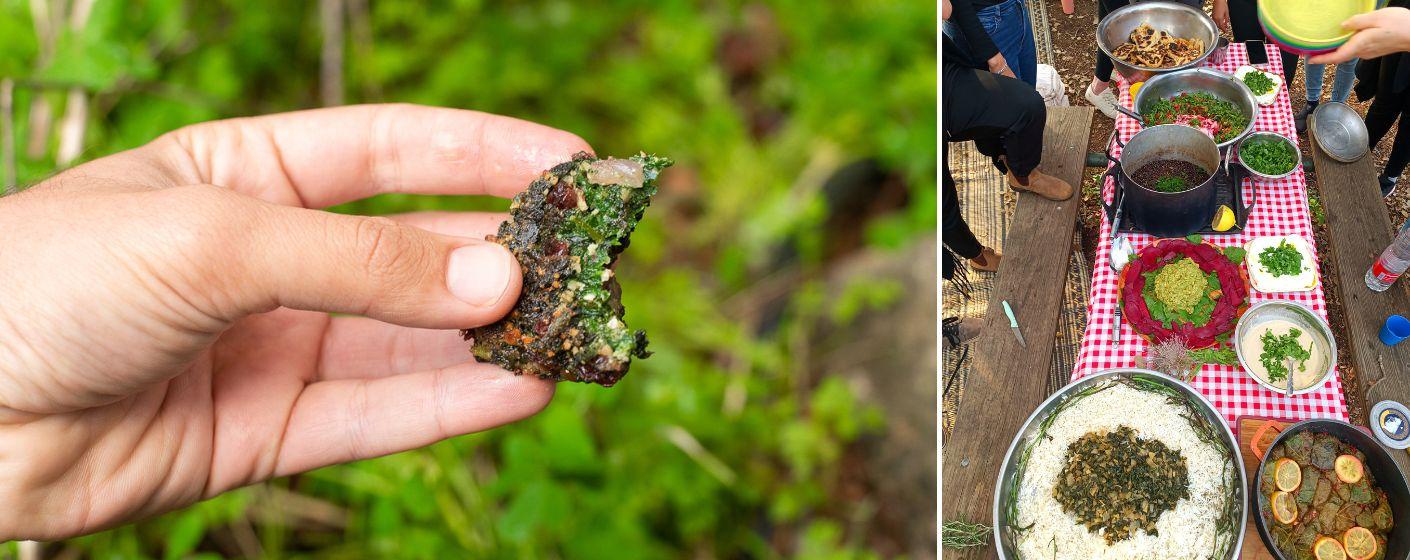
We invite you to join the foraging tours with qualified tour guides ― it is so much more than just foraging. This is the experience of connecting with nature, getting to know wild plants for cooking and medicinal plants, an opportunity to experience the flavors and get to know the stories. An experience for the whole family.
For offers for pre-booked foraging tours and upcoming foraging tours ― here is the link.
Picnic Treats in the Galilee
There is nothing like spring to go on a picnic in nature. We have prepared for you a list of recommended places where you can stock up on the quality products that will make your picnic perfect and recommended picnic spots throughout the Western Galilee.

Recipes for Tu B'Shvat
Of course, you can’t do without some recipes courtesy of our Galilean businesses.
Date Filled Ma’amoul “Zard” – Noor Restaurant
Recipe courtesy of Basma from the Noor Restaurant in Julis. Ma’amoul cookies symbolize joy, unity and simplicity. And that’s an excellent reason, besides the fact that they are so delicious, to prepare them every day of the year!

Honey Cake — Ofir Farm
A recipe that has been passed down through the generations in the Ofir beekeeping family.

Gifts Made in the Galilee for Tu B'Shvat
Do you want to order a delivery with products and gifts for Tu B’Shvat made in the Galilee? Head to the Taste the Galilee Store

Blossoming Trips
Get 3 recommendations for blossoming trips in the months of January to March, and recommended restaurants and cafes in the area.
Anemone Blooms
There are instances of several colors. In the lower areas the blossoming starts in January and in the higher areas in February.
Why an anemone? Because she is as beautiful as a bride!
Blooming Spots: In the Me’ona village you will find spectacular blooms of anemones in many colors.
Where to Eat: The Aluma Bistro Restaurant in Tarshiha that offers a selection of southern French and Mediterranean delicacies, Tupelo — Wheat Free Bakery & Cafe in Tarshiha, or the Hadaral’e Restaurant ― a kosher chef restaurant on the shores of Lake Monfort in Ma’alot.

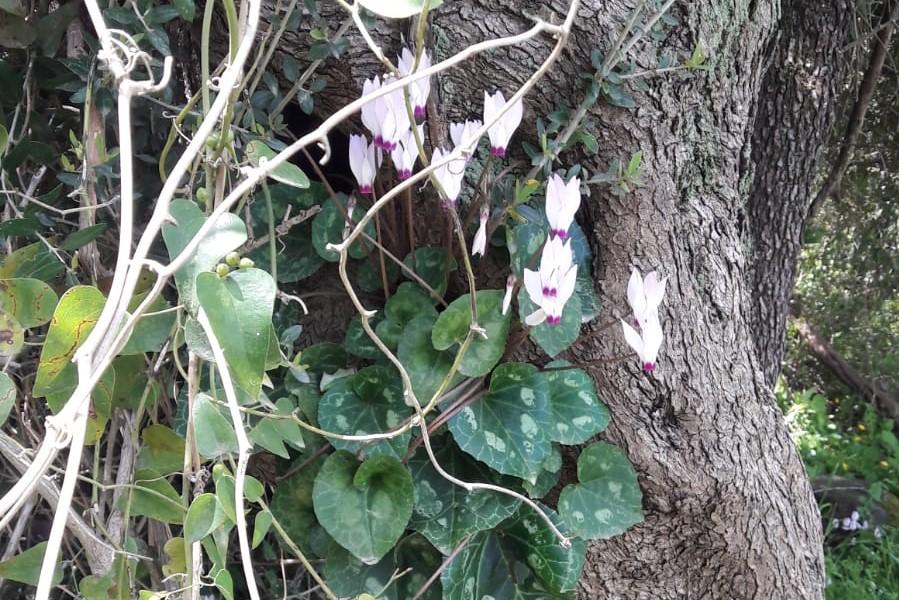
Cyclamen Blooms
Blooms over a long period of time.
Blooming Spots: forests and groves. For example in a bird forest.
Where to Eat: Ofir Farm Winery and Apiary in Alon HaGalil where you can sit in the grove and enjoy a glass of wine and light food. Yodfat Cafe in the Yodfat village is a cafe that overlooks an amazing view, and is located in the Boacha Yodfat Shopping Complex. Highly recommended.

Catchflies & Egyptian Honesty
Creates a magnificent purple and pink carpet mainly in olive groves.
Blooming Spots: at the entrance to the village of Clil, between the olive trees. In Kfar Jat ― it is recommended to park near Beit Chabad and walk to the left for about 5-10 minutes to the area of the olive groves.
Tip: The catchflies are also an edible plant, used to fill sambusk.
Where to Eat: Noor Restaurant for kosher Druze food in Kfar Julis, Alto Dairy a dairy, cafe and deli in Kibbutz Shomrat

Photo: Ayelet Bar Meir
Excursions Following Trees
There is nothing like the New Year of the Trees to go out into nature following older and less ancient trees, and give them the respect they deserve. After all, it is not for nothing that the Torah teaches us “that man is the tree of the field.”
Let’s start with a recommendation for a trip courtesy of tour guide Amnon Gofer, following the ancient carob tree in Kfar Peki’in.
The planting of the carob tree symbolizes kindness and faith, its growth symbolizes resistance to difficult conditions and its fruits symbolize longevity. Rabbi Shimon bar Yochai fed for 12 years on the fruit of the carob tree, which is known for its many healing properties, when he lived in a cave with his son in Peki’in.
The road to the carob tree leads to the entrance of the cave where Rabbi Shimon and his son Eleazar were hiding. Among the other medicinal properties of the carob, you can find the use of carob honey as a remedy for mouth abscesses, in folk medicine it is considered to relieve breathing problems and more.
How to Get There:
After reaching the village of Peki’in, drive to its upper part on the road (towards the village of Rama). A clear sign in a small parking lot tells the story of the village of Peki’in and is right at the beginning of the path leading to the tree. You go down the stairs with oak and carob trees on both sides and reach the entrance of the cave with the ancient carob tree next to it.

A Nice Story:
The Arab farmers usually plow the soil around the olives after the harvest, in order to condition the soil. The primrose bulbs that are found while turning the soil are collected and planted near the olives. And in this case the farmer that and placed the bulbs inside the trunk and see what came out!